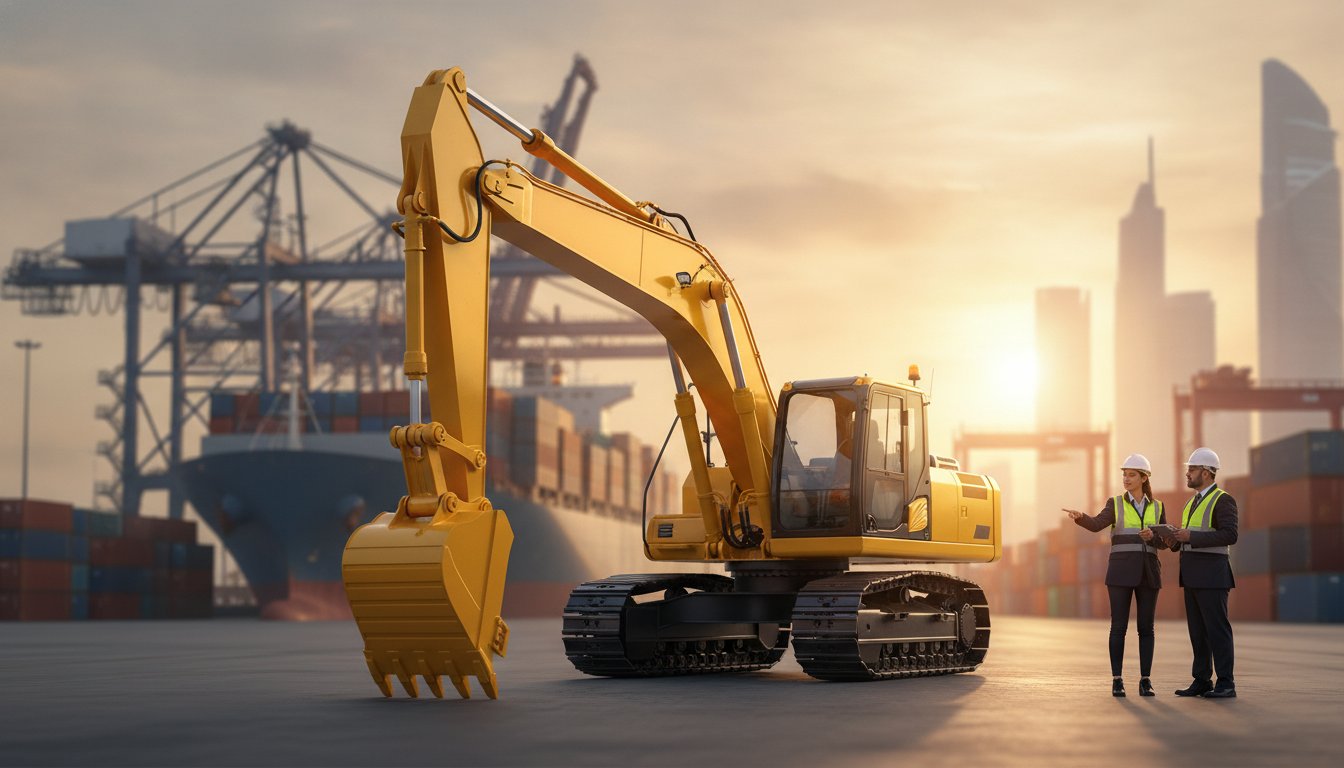
The global used industrial machinery market is projected to hit $813.99 billion in 2026, yet inventory for heavy-duty construction equipment fell by over 13% at the start of the year. This scarcity makes the search for used excavators for sale a high-stakes endeavor for contractors and fleet managers alike. You likely recognize that a lower upfront cost is only a benefit if the machine stays operational. The risk of unseen hydraulic leaks, high shipping fees, or the inability to find spare parts for older models can quickly turn a smart investment into a costly liability.
We’re here to help you secure a high-performance machine while avoiding the common pitfalls of the pre-owned market. This 2026 guide provides the technical clarity you need to procure a job-ready excavator and minimize future downtime. We’ll cover essential inspection protocols, the importance of sourcing from established trading hubs like Sharjah, and how to ensure your equipment has long-term spare parts support. By the end of this article, you’ll have a methodical plan to build a reliable fleet that meets industrial standards without the operational friction.
Key Takeaways
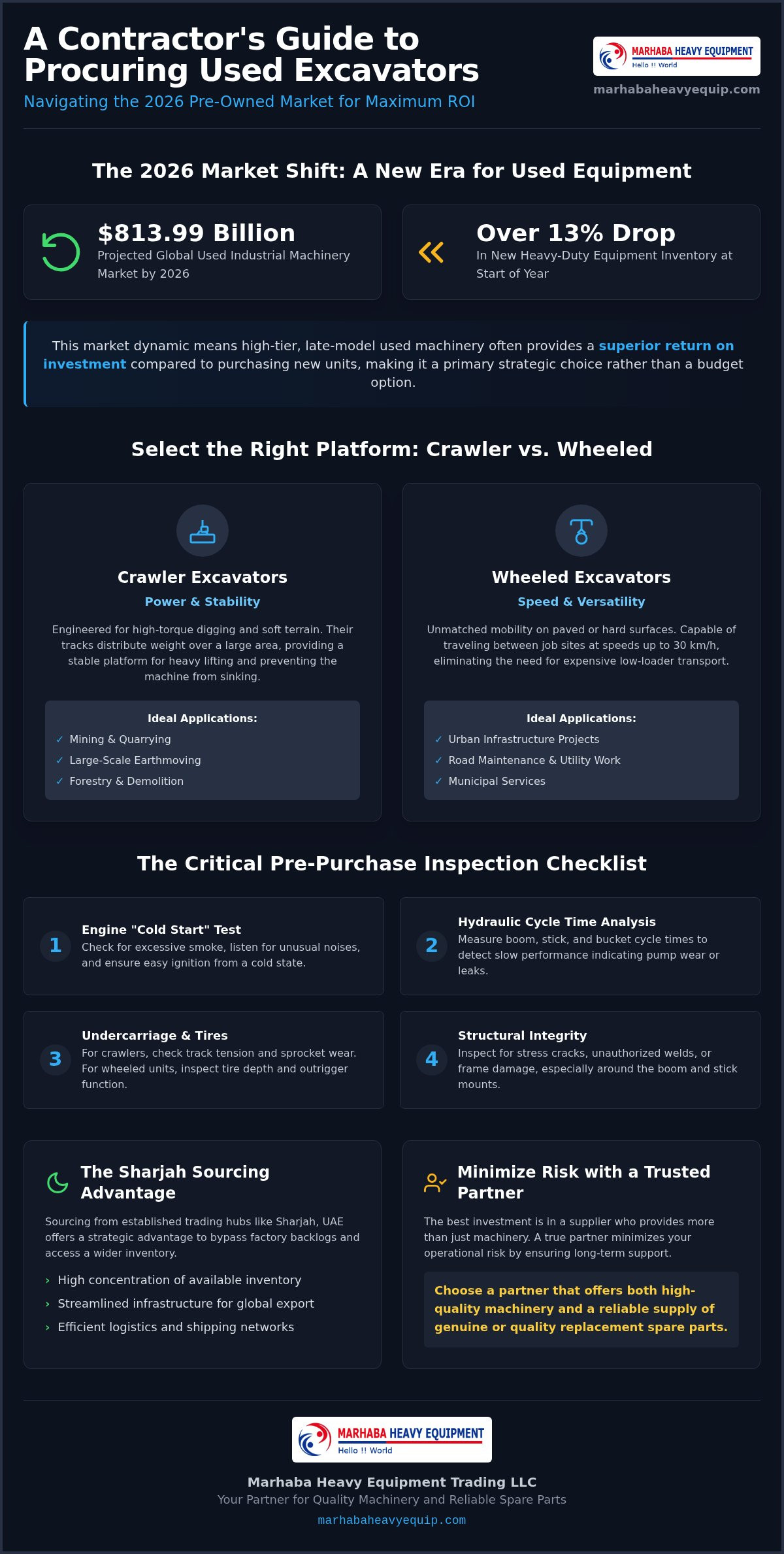
- Understand the 2026 market shift where high-tier used machinery often provides a better return on investment than purchasing new units.
- Determine the ideal machine configuration for your specific terrain by comparing the stability of crawler tracks against the mobility of wheeled units.
- Learn how to conduct a rigorous technical inspection, including the “Cold Start” engine test and hydraulic cycle time analysis.
- Discover the logistical benefits of sourcing used excavators for sale from Sharjah, a premier hub for efficient global shipping and equipment export.
- Minimize operational risks by choosing a partner that offers both high-quality machinery and a reliable supply of genuine or quality replacement spare parts.
Navigating the Market for Used Excavators in 2026
The market for heavy machinery has reached a definitive turning point. In 2026, high-tier used equipment is frequently outperforming new units in terms of return on investment (ROI). This shift occurs because late-model machines have already absorbed their steepest depreciation, yet they retain the advanced hydraulic technology required for modern job sites. When searching for used excavators for sale, contractors are no longer just looking for a budget option. They’re looking for a “Second Life” asset. A well-maintained Excavator built with a robust hydraulic system can be refurbished to factory-standard performance at a fraction of the cost of a new purchase.
Global supply chain fluctuations continue to influence equipment pricing. While manufacturing output has stabilized, the lead times for specialized new models often stretch into several months. This delay creates a significant premium on immediate availability. Sourcing from established trading hubs like Sharjah in the UAE offers a strategic advantage. These hubs provide a high concentration of inventory and a streamlined infrastructure for global export. It’s a methodical way to ensure machinery reaches the job site without the friction of long factory backlogs.
Key Drivers of the Used Machinery Demand
Immediate availability remains the primary driver for many fleet managers. In sectors like mining and earthmoving, a project cannot wait for a factory delivery that might be half a year away. Buying used allows for rapid fleet expansion to meet sudden contract demands. Additionally, the cost-to-performance ratio is often superior. A reliable, pre-owned machine performs the same work as a new unit but with lower monthly overhead. There’s also a clear sustainability benefit. Refurbishing a heavy-duty frame reduces the carbon footprint associated with manufacturing new steel components, which supports corporate environmental goals.
Common Weight Classes and Their Applications
The specific application dictates the necessary machine size. Mini and compact excavators are essential for urban utility work and precise landscaping where space is constrained. Standard or medium-sized units, typically ranging from 20 to 35 tons, serve as the backbone of general construction and roadwork. For massive earthmoving or mining operations, large and heavy units are required. These specialized machines are built to handle high-volume material moving and offer the durability needed for continuous industrial cycles.
Selecting the Right Type: Crawler vs. Wheel Excavators
Choosing between a crawler and a wheeled unit is a decision that impacts your daily operational costs and site safety. When evaluating used excavators for sale, you must first analyze the primary terrain of your project. Crawler excavators are the industry standard for high-torque digging and soft soil conditions because their tracks distribute weight over a larger surface area. This low ground pressure prevents the machine from sinking in muddy or unpaved environments. Conversely, wheeled excavators offer unmatched mobility on paved surfaces and are ideal for urban infrastructure projects where asphalt protection is mandatory.
Used Crawler Excavators: Power and Stability
Crawler models are the preferred choice for heavy-duty applications such as mining, forestry, and large-scale earthmoving. Their design provides a stable platform for deep digging and lifting heavy loads without the risk of tipping. For example, Komatsu crawler excavators are renowned for their durable undercarriage engineering, which is a critical factor when buying used. When you’re inspecting these units, focus on the undercarriage health, specifically the track tension and sprocket wear. Ensuring these components meet OSHA’s excavation safety requirements is vital for maintaining a secure work environment. If you need help identifying specific wear patterns, you can consult with experts regarding high-quality used excavators and their maintenance history.
Used Wheel Excavators: Speed and Versatility
Wheeled units provide a distinct advantage in “roadability.” These machines can travel between multiple job sites at speeds of up to 30 km/h, which eliminates the need for expensive low-loader transport. This versatility makes them the primary choice for road maintenance and utility work in congested cities. During your inspection of a wheeled unit, prioritize the condition of the outriggers and the tire tread depth. Outriggers are essential for providing the stability that tracks would otherwise offer. It’s also important to consider that while tire replacements are generally less expensive than full track overhauls, they occur more frequently in abrasive environments.
Operational stability and lifecycle maintenance costs differ significantly between these two types. When you are browsing used excavators for sale, it’s helpful to compare the hourly operating costs of tracks versus tires. Track links and rollers in crawler units are built for longevity but represent a higher capital investment during a rebuild. Tires offer lower initial replacement costs but are susceptible to punctures on rocky sites. Selecting the right machine requires a balanced view of your site’s topography and your long-term maintenance capabilities. By aligning your choice with your specific project needs, you ensure that your investment remains productive throughout its second life.
The Critical Inspection Checklist for Pre-Owned Machinery
Procuring used excavators for sale requires a methodical approach that goes beyond a simple visual assessment. You must conduct a hands-on inspection to ensure the machine can withstand the rigors of industrial cycles without immediate failure. The first step in any professional evaluation is the “Cold Start” test. A healthy engine should ignite promptly without excessive cranking. Once running, observe the exhaust signals. Black smoke often suggests fuel system inefficiencies, while blue smoke indicates oil consumption. White smoke is a primary indicator of coolant leaks or timing issues. These visual cues provide immediate insight into the internal health of the engine before you commit to a purchase.
Structural integrity is paramount, especially for machines destined for heavy-duty mining or large-scale earthmoving. Clean the machine thoroughly to reveal hidden stress cracks or recent welds that might disguise structural fatigue in the boom, arm, or bucket. Pay close attention to the pivot points and bucket linkage. Excessive play or “slop” in these joints leads to a loss of digging precision and places undue stress on the hydraulic system. For those sourcing from global hubs like Sharjah, ensuring the machine meets these rigorous structural standards is the key to minimizing operational friction upon arrival.
Hydraulics and Swing Gear
The hydraulic system is the most critical component for machine performance. Listen for unusual whining or knocking sounds from the main pump, as these often signal cavitation or internal wear. Test the swing motor by rotating the upper structure and stopping abruptly. Any significant “drifting” or grinding noises indicate worn gears or a failing swing brake. Inspect every hydraulic cylinder for pitting or damage to the chrome plating; these imperfections will quickly destroy seals and lead to costly leaks. Hydraulic drift occurs when a cylinder fails to maintain its position under load, which creates a significant safety hazard for ground personnel and site equipment.
Engine and Undercarriage
The operating environment greatly influences the wear patterns of an engine. In arid or dusty regions, the air filtration system must be pristine. Check the intake manifold for signs of dust bypass, as even minimal silica ingestion can cause catastrophic engine failure. On crawler units, measure the wear on the sprockets and idlers. If the sprocket teeth appear sharp or “pointed,” they are nearing the end of their service life and will require replacement. Additionally, evaluate the cooling system to ensure the radiator is clear of debris and the coolant shows no signs of oil contamination. High-performance cooling is a requirement for machinery operating in high-ambient temperature markets.
Finally, always verify the hour meter against the available service logs. A machine with higher hours and a documented history of consistent maintenance is often a safer investment than a low-hour unit with no records. These logs should distinguish between the use of genuine OEM parts and high-quality replacement components. This level of transparency ensures you are receiving a machine that is truly job-ready and capable of delivering a reliable second life on your site.
Sourcing and Logistics: Why Sharjah is a Global Hub
Sharjah is a strategic nexus for the heavy machinery trade. For international buyers looking for used excavators for sale, the UAE provides a mature ecosystem that simplifies global procurement. The region hosts over 2,300 machinery and equipment firms, backed by industrial investments that surpassed Dh3.51 billion over the past five years. This concentration of expertise ensures that you’re not just buying a machine; you’re tapping into a streamlined supply chain designed for high-stakes industrial exports. The UAE’s infrastructure allows for rapid movement from industrial zones to major shipping terminals, reducing the time your capital sits idle in transit.
Navigating international shipping and customs requires a methodical approach to documentation and compliance. Every machine must meet the safety standards of its destination, such as the conformity requirements set by ESMA in the UAE. You also need to account for regional emissions regulations to avoid port-of-entry delays. Working with a supplier that understands these nuances is the best way to remove operational friction. They ensure that all technical specifications are transparent and that the machinery is ready for immediate deployment upon arrival at your site.
Exporting from the UAE to Africa and Beyond
The logistics of moving heavy equipment across continents rely on established shipping routes. Sharjah’s proximity to world-class ports like Jebel Ali and Khalid Port facilitates efficient sea freight to major African and Asian gateways. You’ll need to manage a specific set of documents, including the Bill of Lading, Certificate of Origin (COO), and various inspection certificates required by the destination country. For projects in remote mining or construction zones, the “Last Mile” delivery is often the most complex phase. A seasoned trading partner coordinates these logistics to ensure the machine arrives safely at its final destination.
The Role of Spare Parts in Global Sourcing
A machine is only as reliable as the parts available to fix it. This is why Sharjah’s status as a hub for heavy equipment spare parts is a critical advantage for international buyers. Proximity to a massive inventory of Komatsu and other major brand components means you don’t have to wait weeks for a simple seal or filter. When you export a unit, it’s a professional standard to build a “Support Kit” that includes essential maintenance items. These kits typically contain high-quality filters, seals, and wear parts to cover the first several hundred hours of operation. If you are ready to expand your fleet, you can browse our current inventory of used excavators to find a machine backed by this comprehensive support network.
Why Marhaba Heavy Equipment is Your Trusted Partner
Success in heavy machinery procurement depends on the reliability of your supplier. Marhaba Heavy Equipment Trading LLC brings decades of specialized expertise to the Middle Eastern and African markets. We understand the high stakes of industrial work and the necessity of dependable machinery. Our team focuses on high-demand brands like Komatsu, ensuring that every unit meets strict industrial standards before it reaches your fleet. When you evaluate used excavators for sale through our inventory, you’re partnering with a seasoned industry expert that prioritizes long-term performance over transactional sales.
Our commitment to transparent inspections ensures that you have peace of mind with every purchase. We provide a methodical presentation of each machine’s capabilities and history. This solution-focused approach removes the operational friction often found in the pre-owned market. By maintaining high standards for every unit in our yard, we help you secure a machine that is truly job-ready. We take responsibility for the quality of our equipment because we value long-term relationships with our global clients.
Our Inventory: Beyond Just Excavators
While we specialize in excavators, a productive site often requires a synchronized fleet of earthmoving and mining equipment. Our inventory is curated to offer synergy between different machine types. We provide a comprehensive range of machinery, including:
- Used Bulldozers and Motor Graders for precise site leveling and roadwork.
- Used Wheel Loaders and Road Rollers for material handling and compaction.
- Specialized mining equipment, such as rigid dump trucks and mining drills.
We prepare every machine for its next project through a rigorous quality assurance process. This involves a thorough technical evaluation of the hydraulic systems and structural components. This methodical preparation ensures that your equipment is ready for immediate deployment upon arrival at your site.
The Marhaba Advantage: Spare Parts and Support
Sourcing used excavators for sale is only the first step in effective fleet management. The true Marhaba advantage lies in our integrated support for the entire machine lifecycle. Because we are strategically based in Sharjah, we maintain a massive inventory of heavy equipment spare parts. This proximity eliminates the friction of sourcing components for older models or specialized Komatsu units. We ensure that our clients have access to the parts they need to keep their operations running smoothly.
Our consultants provide expert guidance on fleet maintenance and longevity. We help you identify the right spare parts and build support kits to minimize operational downtime. This commitment to partnership ensures that your investment remains a high-performance asset for years to come. Visit Marhaba Heavy Equipment to view our current excavator inventory and find the right machine for your next project.
Optimizing Your Heavy Machinery Procurement Strategy
Successful procurement in 2026 requires a balance of technical diligence and strategic sourcing. You’ve learned that selecting the right machine involves more than just comparing price tags; it demands a thorough understanding of terrain requirements and a rigorous approach to hydraulic and engine inspections. By prioritizing machines with documented service histories and verified structural integrity, you can significantly reduce the risk of operational downtime on your job site.
Sourcing used excavators for sale from a global trade hub like Sharjah provides the logistical infrastructure and spare parts support necessary for international projects. Marhaba Heavy Equipment Trading LLC stands as a dependable ally in this process. We offer a wide range of mining and construction machinery, backed by our expertise as a specialized Komatsu parts supplier and our global export expertise from Sharjah. Our methodical approach ensures that every unit is prepared for its next industrial cycle with precision and care.
We invite you to Browse Our Current Inventory of Used Excavators to find a reliable addition to your fleet. Our team is ready to provide the technical consultation and logistical support you need for a successful acquisition. We look forward to helping you build a more efficient and resilient operation.
Frequently Asked Questions
What is a good number of hours for a used excavator?
A machine with 5,000 to 8,000 operating hours is generally considered a balanced investment for the second-hand market. At this stage, the equipment has often absorbed its steepest depreciation while still retaining significant life in its main hydraulic components. Machines exceeding 10,000 hours often require more intensive maintenance or a full undercarriage rebuild. When browsing used excavators for sale, always prioritize the quality of maintenance over the raw hour count.
Which brands of used excavators are the most reliable?
Komatsu, Caterpillar, and Volvo are widely recognized as the most reliable brands in the heavy equipment sector. These manufacturers use high-grade steel and robust engineering standards that allow their frames and engines to last through multiple life cycles. Komatsu, in particular, is favored for its hydraulic precision and the widespread availability of spare parts. This brand-specific durability is a primary reason these units hold their resale value so effectively in the global market.
How much does it cost to ship an excavator from the UAE to Africa?
Shipping costs depend on the machine’s weight, its physical dimensions, and the specific destination port. While we don’t provide fixed pricing due to fluctuating fuel surcharges and port fees, shipping from Sharjah is highly efficient. The UAE serves as a major gateway with established Roll-on/Roll-off (RORO) and container routes to major African ports. Buyers should also account for local customs duties and “last mile” transport from the port to the job site.
Can I get spare parts for older Komatsu excavator models?
Yes, you can reliably source spare parts for older Komatsu models through specialized trading hubs. Sharjah is a premier location for this, as it hosts a massive inventory of both genuine OEM and quality replacement parts. Maintaining an older machine is a cost-effective strategy if you have a dependable supplier for essential filters, seals, and hydraulic pumps. This support network ensures that older units remain productive assets without the risk of extended downtime.
What is the difference between a standard and a long-reach excavator?
A standard excavator is designed for high-torque digging and material loading in general construction. In contrast, a long-reach model features an extended boom and arm assembly for specialized tasks. These units are essential for deep dredging, high-reach demolition, or working across wide ditches where the machine cannot safely approach the edge. While long-reach models offer greater range, they typically have smaller bucket capacities to maintain stability at full extension.
Should I buy a crawler or a wheeled excavator for road construction?
A wheeled excavator is typically the superior choice for road construction and urban maintenance. These machines move quickly between work zones at speeds up to 30 km/h and won’t damage finished asphalt or concrete surfaces. Crawler units are better suited for the initial clearing phases of a road project where the terrain is still soft or uneven. For most utility and finishing work on paved roads, the mobility of a wheeled unit is a significant advantage.
How do I verify the service history of a used excavator?
You can verify the service history by reviewing physical maintenance logs and cross-referencing the hour meter with visible wear patterns. Look for consistent oil change intervals and evidence of major component replacements, such as hydraulic pumps or track chains. If the machine is equipped with telematics, you can request a digital report to see historical load cycles and fuel consumption. A lack of documentation is often a signal to perform a more rigorous technical inspection.
What are the most common signs of hydraulic pump failure?
Common signs of hydraulic pump failure include a persistent high-pitched whining noise and significantly slower cycle times during operation. You may also notice erratic or “jerky” movements in the boom and bucket, which suggests the pump is struggling to maintain consistent pressure. Excessive heat radiating from the hydraulic tank or the presence of metal shavings in the hydraulic filters are definitive indicators of internal wear. Addressing these signals early can prevent a catastrophic system failure.
Leave a Reply